Art in the Contemplative Sciences Center
Chloe Sherril-Howell / V Mag at UVA
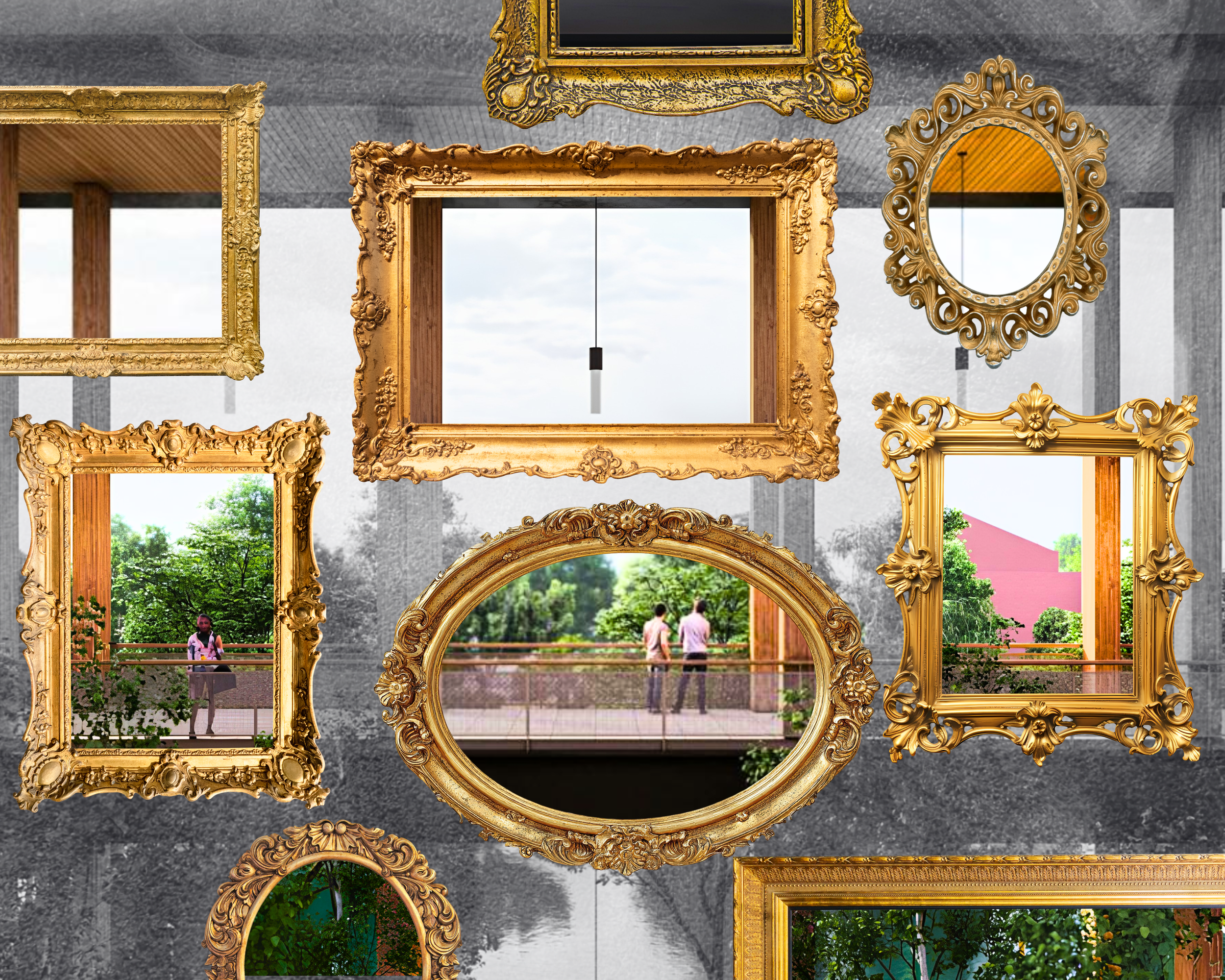
The Contemplative Commons has always had art on its walls. Housing the Contemplative Sciences Center, the building displays a permanent collection spread throughout its spaces, making it as much a gallery as a gathering space. For the first time, some of what’s hanging belongs to the University’s very own students.
The Center's first Student Art Showcase ran from March 25 to April 1, 2026.
Planned by third-year Architecture student Mia Tesoriero, the event was a long time coming. Growing up, Tesoriero had her own work selected for the Art in the Square festival at Southlake Town Square in Southlake, Texas, and the feeling of seeing it hung somewhere stuck with her.
“I just think student art should be in a space for students,” Tesoriero said. “It’s always just exciting to be able to look at your work somewhere and be proud of it.”
The showcase, centered around the theme of “Nature and the Built Environment,” directly mirrors the building’s own design philosophy through a student lens. As an architecture student, Tesoriero was drawn to the way the building integrates natural elements into its structure, from the Dell Pond views to its open, sunlight-filled interiors. The theme, she said, became a way to bridge her own academic interests with the building’s identity.
It also gave contributors enough room to interpret the theme as they saw fit. Some went landscapes, others cityscapes or memory, but almost all of the work sat somewhere in the conversation between the natural and the man-made.
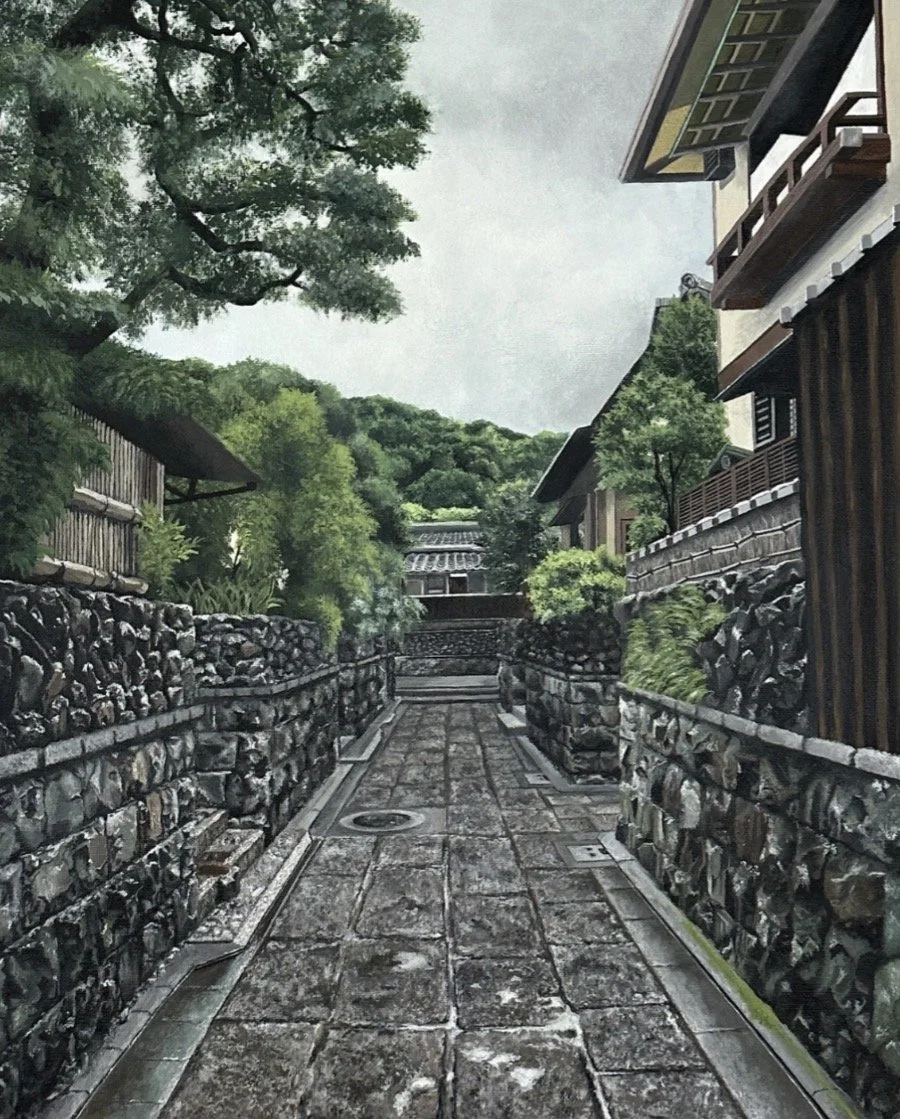
For first-year Architecture student Claire Nasu, that balance came naturally. Her painting, based on a photograph she took in Japan, captures what she described as a quieter, less-visible side of the country, far from the familiar images of Kyoto temples or Shibuya Crossing.
Claire’s submission
“I really wanted to show the authentic side of Japan,” Nasu said, referring to the way her work blends greenery with everyday built spaces.
Nasu, who began painting more seriously just a few years ago, spent nearly 150 hours on the piece. For her, the slow, detailed, almost meditative process is just as important as the final result.
That sense of slowing down and paying attention surfaced across many of the artists’ inspirations.
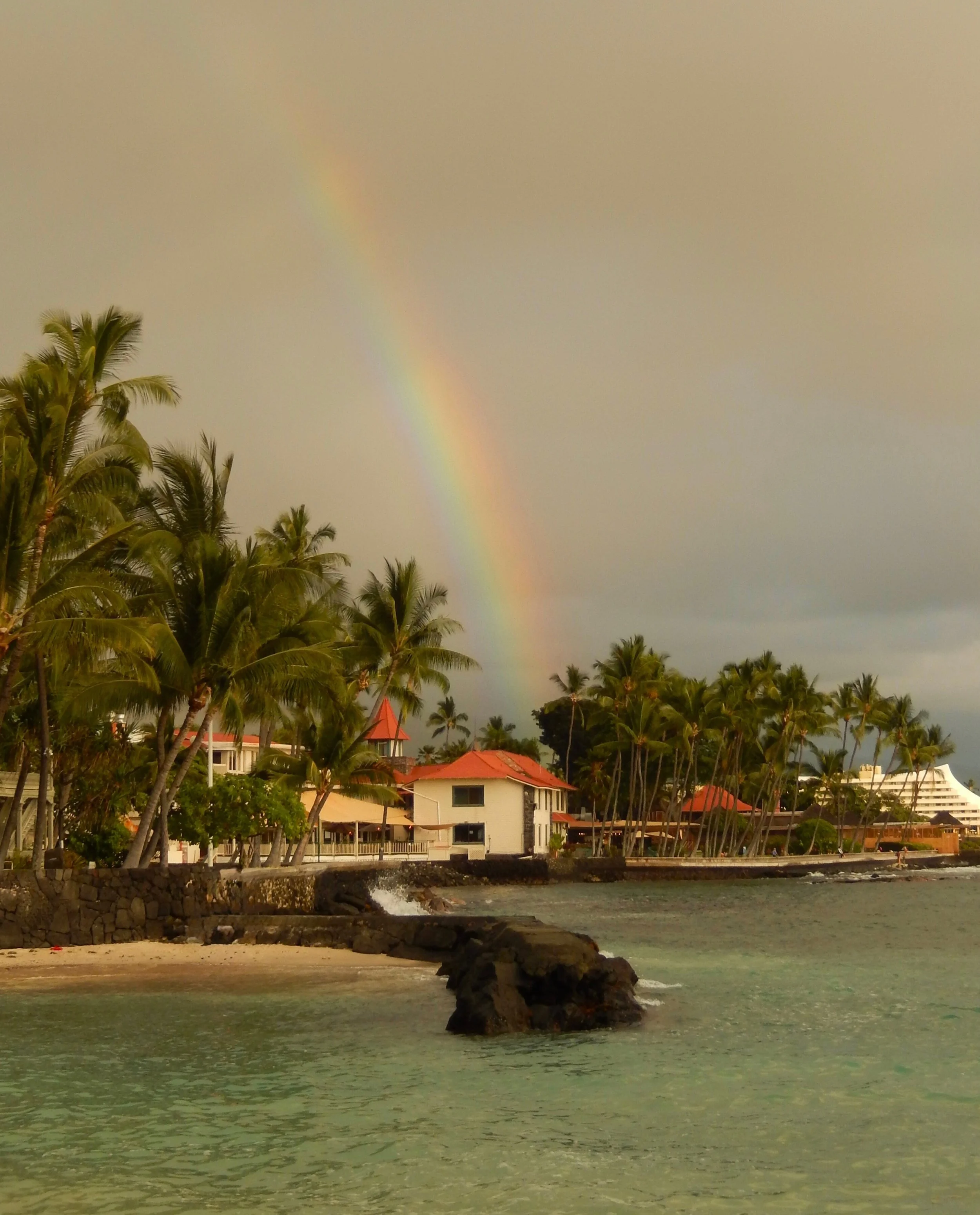
For second-year College student Kelly Tran, photography is less about perfection and more about presence. If something catches her eye, she takes out her camera and shoots it.
"I feel like we get so caught up in internships [and] classes," she said. "It's just nice to retreat to the small things in nature."
Kelly’s submission
That same balance between technical and creative thinking appeared in many of the showcase’s contributors, particularly those studying in STEM fields.
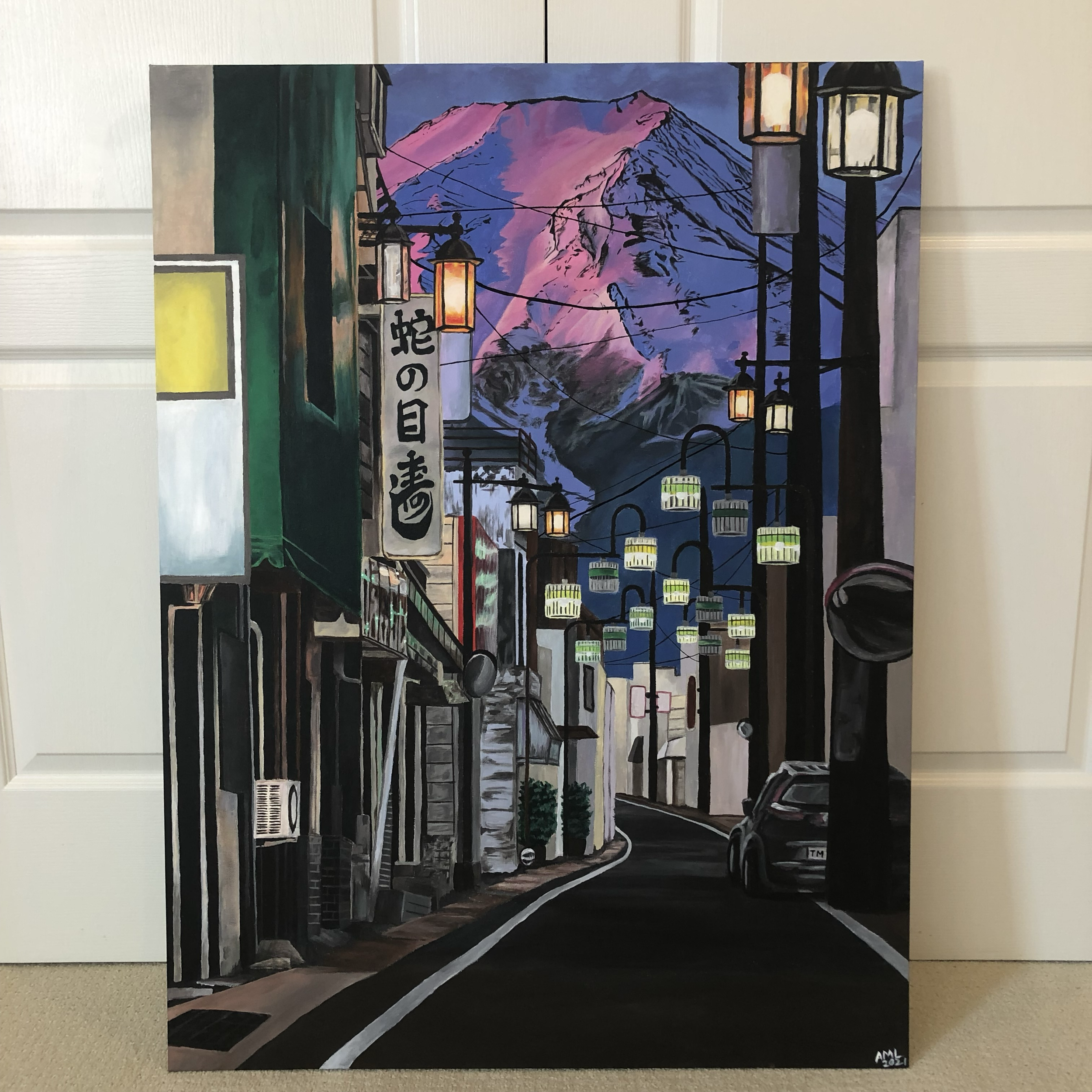
Ava Lawless, second-year Data Science student and studio art minor, sees her 30-by-40-inch painting as a counterbalance to her academic work. While her coursework is rooted in technical problem-solving, she finds that art strengthens her ability to think innovatively within those spaces.
“I feel like I’m able to approach coding problems from a more creative perspective,” she said.
Ava’s submission
The showcase also reached beyond the undergraduate community. First-year Master's in Science in Data Science (MSDS) student Bhavya Devarsu had only a few days to complete her piece after seeing the call for submissions on Instagram. She usually works in oil, but switched to acrylic so it would dry in time. Her subject, the Palace of Fine Arts in San Francisco, already had a lagoon and surrounding greenery built into it. “The nature was already there,” she says.
Devarsu’s family drove over two hours from Maryland to attend the event, joining students and other visitors as they moved between pieces. Conversations filled the room naturally. Some stopped to analyze technique, others to share personal interpretations, and many simply lingered.
“I think when you get a bunch of people together in a space where they’ve creatively expressed themselves… it leads to really interesting conversations and meaningful connection,” Tesoriero said.
The Student Art Showcase adds student-created work to a collection that has been growing since the building opened in August 2024, drawing from artists around the world.
Some of those works include a 15-by-24-foot video wall at the entrance that cycles through short films by internationally recognized artists, immediately immersing visitors in motion, color and scale.
Nearby, “Conference of the Birds”, an intaglio and mixed-media work by former University professor Dean Dass and his former student Clay Witt, rewards a slower, closer look, revealing hidden forms the longer one stands in front of it.
Further inside, the “Ninfeo” installation fills a room with 3,320 laser-etched crystal blocks. An infrared camera tracks the movement of fish and currents in the Dell Pond outside, triggering light and sound that shift in real time.
More information and pictures of the Commons' permanent collection can be viewed here.’
According to Connie Kresge, Chief of Staff at the Contemplative Sciences Center, the exhibit's goal is to evoke emotional responses in viewers.
“When you're encountered with beauty or great art, it can create a sense of awe,” she said. “Awe can lead to a state where you start feeling connected to everything.”
Unlike the building’s art collection, where viewers interpret someone else’s vision, the student showcase invites people to recognize pieces of themselves through shared experiences, identities or ways of seeing the world.
And while only a handful of student works currently occupy the space, they point toward something larger. Just as the building was designed to evolve through conversation and connection, so too can its art evolve.