Grounds for Change: From Jeffersonian to Modern
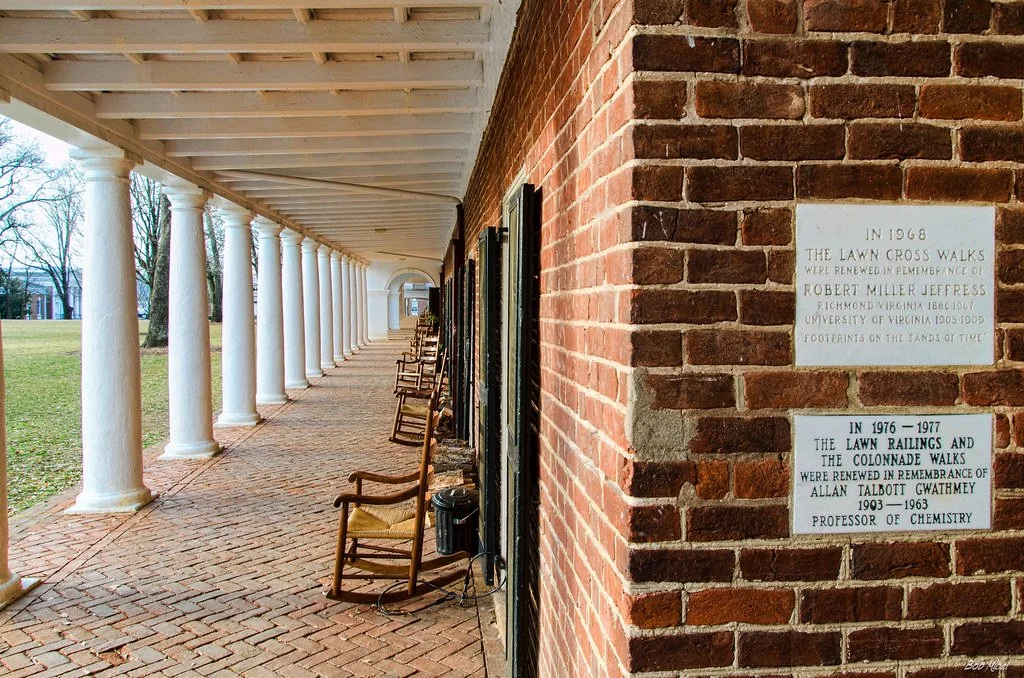
Bob Mical / Flickr
If you type “the University of Virginia” into Google and hit enter, the first image that appears is the Rotunda.
Instagram yields the same result. So does X. In fact, the same is true for any search bar. The University’s branding is clear: anywhere the name of the University appears, the iconic Rotunda does, too.
However, the iconic architectural logo may misconstrue more than it reveals. While the grand, impressive building may initially manifest the school’s famous founder or academic prestige, the Rotunda teeters on a slackline between the school’s elite status and controversial past of forced labor and exclusionary practices.
Moreover, the University has recently endeavored towards modernized architectural endeavors — like the Breeden Commerce Grounds, Contemplative Commons and the School of Data Science. These new buildings may soon become a more acute portrayal of the University’s academic image: not of liberal arts, but of preprofessional training.
When the University was founded in 1819, it consisted only of the Academical Village, housing 125 white, male students and eight faculty members, and offering studies in eight departments of liberal arts. This unique history also raises ethical questions that cannot be ignored but don’t exactly find a “place” in the diverse, inclusive image the University touts today.
Today, the University offers a bifurcated perspective, one that both celebrates and deviates from the architectural implications of the past. University tours, sanctioned and unsanctioned alike, provide insight into the discourse surrounding the ethics of the University’s classic architecture.
Nina Accousti, a fourth-year Virginia Guide whose tour centers around the historic architectural centers on Grounds, calls attention to the importance of questioning the spaces around us.
“The history will always be there,” Accousti said. “It's always going to have happened. We just find ourselves in this place now. So I think it's important to just be curious about every layer.”
The University’s official admissions tours take a similar stance. While still physically centering Jeffersonian architecture — circling from the Lawn to Shannon Library to Clark Hall — the tours provide discretionary information about the ethical concerns these spaces raise.
“We do acknowledge that our campus is built on slave labor, and that it’s indigenous grounds,” second year admissions intern Anh Vu said.
Additionally, these admissions tours disseminate information regarding all the University's academic pathways, including information about prerequisites and applying to preprofessional schools — information which doesn’t necessarily correlate with the academic buildings they’re being shown, but gives insight into other ways in which the University may be shifting from its classic architectural image.
While the liberal arts programs that are so commonly associated with the University’s traditional image are nowhere near disappearing, preprofessional academic programs have starkly risen in popularity and prominence. According to the University’s enrollment statistics, the number of undergraduate students in the Mcintire School of Commerce has risen from 802 to 1225 in just two academic years.
The rise of these programs has been paralleled by their architectural trends. The facilities associated with the School of Data Science and the McIntire School of Commerce, which opened in 2024 and 2025, respectively, have strayed from the classic Jeffersonian image, exhibiting more open-concept and modern designs. These improvements imply more than just aesthetic differences — the newer schools include a variety of amenities for students, including dining options, flexible seating and wellness activities.
“Not many students know about [the Data Science building]… but I love it,” said Michelle Jargalan, a second year data-science major. “I’m glad that the Data Science School gives me resources like that.”
Aside from their advantageous facilities, Data Science students enjoy other benefits like networking events, career fairs and predetermined enrollment. However, these opportunities are two-fold — while providing tremendous resources for some students, they exclude the vast majority of others. As liberal arts students still largely labor in dilapidated buildings from the 19th century, they are also given far fewer university-sponsored programs of this sort. The University’s architectural improvements are far from random, they reflect funding and priorities.
The University’s architectural trends thus have two directional endpoints: away from the racist and exclusionary narratives of the Academical Village and toward a more modern, preprofessional academic culture. Though the Rotunda still dominates Google searches and -shirts, it may not accurately represent the future of the University’s architectural pursuits. The building itself might not be changing, but everything around it — discourse and Grounds alike — resoundingly is.