Morven Sustainability Lab: A New Era
Sofia Basadre / V Mag at UVA
Morven staff kick off a decade of diving deeper into the arts, culture and its connection to the University.
The University’s Morven Sustainability Lab is at the cusp of a new era. The release of its 10-year Strategic Action Plan will give the 2900 acres of Morven grounds a clear purpose — to become a more active part of the University in environmental research, environmental sustainability practices and environmental arts. The plan will be a boon to the arts and culture that are a central part of the soul of Morven. These changes will be woven into the educational fabric of U.Va. as Morven becomes more connected to the student community while also recognizing the history and importance of the farm. While Morven is best-known in the student body for being a place to experiment with sustainability practices, especially in regard to gardening, the Strategic Action Plan will breathe new life into the Lab.
In 2001, philanthropist John Kluge gifted the Morven lands to the University of Virginia Foundation to be used educational and charitable purposes, while preserving the historic character of the Albemarle County estate. For years, the University used Morven as a place to host classes, conferences, and charitable events. It also instated a Kitchen Garden run by University students during these years, which has remained through the update on motive and activities that Morven began to undergo in 2022, when then-University president Jim Ryan designated it as a teaching and research landscape.
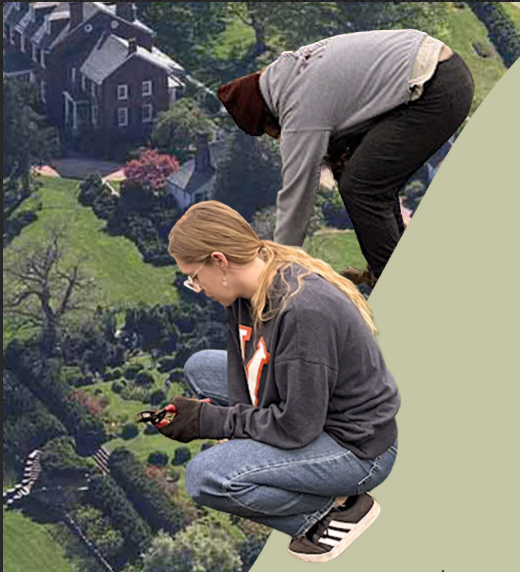
Sofia Arnest, fourth-year College student majoring in Global Sustainability and English, works as a paid student intern at the Kitchen Garden at Morven. Arnest says she values the way that the Morven Farm Garden provides a setting to spitball sustainable farming ideas and provide sustainable foods to the community. A key feature of today’s Morven is the passionate student involvement in its sustainability practices.
“I love talking about Morven,” Arnest said. “It's like a passion project. I feel like everyone that works at Morven is obsessed.”
And as the Strategic Action Plan comes into fruition, there is much more to be obsessed over.
Professor Elizabeth Meyer, the Faculty Director of Morven, is the visionary behind the Action Plan. Her dedication to connecting nature and the arts shaped the plans' final form.
“My background as a landscape architect is through the lens of reading landscape as a text. It's not just something you design through natural sciences and biophysical matter, but it's a record of our culture,” Meyer said.
From an artistic, architectural and design perspective, Morven is a flourishing ecological canvas waiting to be enhanced by creative minds. One of the many new proposed projects on the land is the design of an Environmental Art Park created by the Meriwether Lewis Institute for Citizen Leadership Fellows, a group of rising third-year University students.
According to Meyer, the idea transpired from students brainstorming ways to ground visitors' experience in Morven’s expansive natural landscapes. Students envisioned the Art Park as a series of installations embedded within Morven’s miles of hiking trails, where functional pieces of art — a bench, a sculpture, or a viewing platform — could provide “a sense of comfort, like, ‘Oh, I'm supposed to be here,” Meyer said. She then mentioned that one sustainably built structure has already been created by students for the Art Park, and another is currently in the works.
The Art Park is only a single artistic piece in a variety of works involving Morven. According to Meyer, Assistant Professor Katie Schetlick, a dance artist, has showcased an environmental performance dance piece at Morven and is interested in doing more. Prof. Matthew Burtner, Eleanor Shea Professor of Music at the University, is interested in recording the changing soundscape of Morven — the song of birds and crickets, for example — in relation to the more sustainable environmental practices that the Strategic Action Plan will bring about. Additionally, Prof. Dorothy C. Wong, a professor of Art History at the University, uses Morven’s culturally authentic Japanese Garden to teach about the history of the tea ceremony. Architecture, landscape architecture and design studios have also used Morven as a setting in which to design structures that could align with Morven’s high sustainability standards.
“There's a lot of activity that is outside of the sciences that is intended to open Morven up to students, no matter what their backgrounds are,” Meyer said.
Besides looking to the future to support the expansion of sustainable farming practices and presently intertwining Morven further with the University, the new Action Plan for Morven is invested in recognizing the past of the Morven land that creates its culture.
“So the fact that it had this history to it, which is quite complicated, and I think, super important in terms of a sustainability mission, to recognize that the land is the way it is because of everybody who's shaped it over time, not just the owners,” said Meyer.
The Morven faculty plan to respect and build off of its history by conducting historical research and asking for the input of the Monacan nation and the descendants of the enslaved and paid laborers who worked on the Morven estate. With this information, they will create historical narratives which include a fuller extent of perspectives.
Meyer and her colleagues at Morven – both students and staff – are excited to introduce new programs involving students and broaden its reach into the University community in the upcoming years in order to bring students closer to this cultural history and expand their interest in a sustainable future. Arnest said she is an enthusiastic supporter of introducing the sustainability ideas of Morven, especially from the Kitchen Garden perspective to the next generation of learners. She said she hopes especially to involve more children in learning about eating sustainably.
“You’ve got to sow the seeds, if you will,” Arnest said.